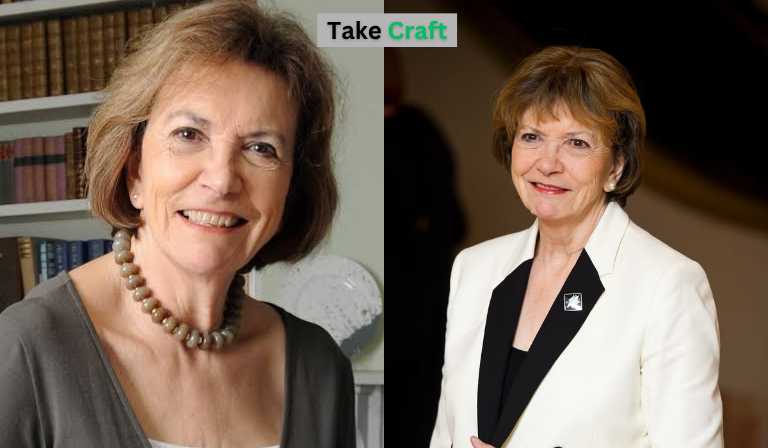
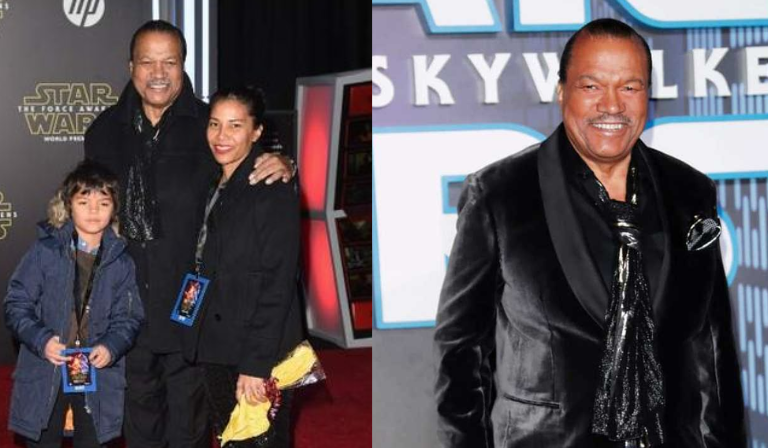
There are public figures who chase the spotlight, and then there are those who simply possess it without trying. Teruko Nakagami falls into the latter category. While many know her as the wife of iconic actor Billy Dee Williams—the smooth Lando Calrissian of a galaxy far, far away—her story stands tall on its own. It is a tale woven with threads of artistic genius, profound resilience, and quiet strength. From the forced confinement of a World War II internment camp to the glamorous heights of Hollywood and the smoky intimacy of jazz clubs, her life reads less like a biography and more like a novel.
But who is Teruko Nakagami beyond the red carpets and the “Star Wars” conventions? To understand her, you have to look at the full picture: a Japanese-American woman born in Chicago, a muse to one of the greatest jazz saxophonists in history, and the anchor who has kept one of cinema’s most beloved actors grounded for over five decades. This isn’t just a story about who she married; it is a story about survival, love, and the art of reinvention. Let’s dive into the nuanced and captivating world of a woman who has lived at the intersection of different cultures and artistic eras.
A Bittersweet Beginning: Growing Up Japanese-American
Before she entered the orbits of jazz and Hollywood royalty, Teruko Nakagami was simply a little girl navigating a world that was often hostile to her heritage. Her early years set the stage for a life defined by adaptability and grace under pressure. Born in Chicago in 1946, Nakagami entered the world just as America was trying to find its footing after the devastation of World War II. She was born Irene Nakagami, a name she would later shed for the more traditional “Teruko” after embracing her heritage more deeply in adulthood.
The most defining and harrowing chapter of her childhood came when she was only six years old. In a shameful period of American history, following the attack on Pearl Harbor, thousands of Japanese-American citizens were forcibly relocated from their homes. Nakagami and her twin sister were sent to a Japanese-American internment camp in California. Imagine being a small child, ripped from any sense of normalcy and placed behind barbed wire. While the conditions were harsh and the injustice undeniable, those who knew Nakagami note that she didn’t speak of the camp with bitterness. Instead, she remembered the resilience of childhood—how she and the other children played games to escape the grim reality of their surroundings. This ability to find light in the dark would become a hallmark of her personality.
The Jazz Era: Marriage to Wayne Shorter
The narrative of Teruko Nakagami often gets split into two distinct artistic volumes. The first volume is written in the language of jazz. In 1961, she met and married the legendary saxophonist and composer Wayne Shorter . This was not just a marriage; it was a merging with the avant-garde. At the time, Shorter was a rising star, soon to become a primary composer for Art Blakey’s Jazz Messengers and later a cornerstone of the Miles Davis Quintet. For Nakagami, this was an immersion into a world of improvisation, late-night sessions, and groundbreaking creativity.
Their union was brief but incredibly fertile in terms of legacy. The couple had a daughter, Miyako, born later that year . In the romantic language that musicians often speak, Shorter immortalized his new family through his art. He composed the stunning ballad “Infant Eyes” as a tribute to his newborn daughter . He also wrote a piece titled “Miyako,” ensuring that the child’s name would echo through jazz history. However, the most iconic visual artifact of this relationship remains the album cover for Shorter’s 1966 masterpiece, Speak No Evil. The woman gracing that enigmatic cover is Teruko Nakagami . Shorter famously described her as looking like a “Japanese Audrey Hepburn”—a compliment that speaks to her timeless elegance and striking features .
From Jazz to Hollywood: Meeting Billy Dee Williams
By the early 1970s, her first marriage had ended, and the jazz chapter was closing. But life was about to hand Teruko Nakagami a plot twist worthy of a Hollywood screenplay. In 1971, she met Billy Dee Williams. At the time, Williams was already a heartthrob, having just starred opposite Diana Ross in Lady Sings the Blues . He was charismatic, handsome, and an artist in his own right. The connection between them was instantaneous and undeniable.
On December 27, 1972, the couple married in a private ceremony in Tokyo, Japan. This union marked the beginning of a partnership that has now spanned over half a century. For Williams, who had experienced two previous divorces, this felt different. For Nakagami, it was a transition from the intellectualism of jazz to the glamour of Hollywood. Yet, she never quite fit the mold of the typical “studio wife.” She was never interested in just being arm candy. Instead, she brought a sense of tranquility and artistic understanding to the relationship. She understood the temperament of creative genius because she had lived with it before. The following year, the couple welcomed their daughter, Hanako, solidifying their new family unit .
Navigating Fame as Billy Dee Williams’ Wife
Being the spouse of an actor who portrays the suave Lando Calrissian comes with a specific kind of public fascination. Unlike many modern celebrity spouses, Teruko Nakagami chose privacy. While Billy Dee charmed the press and the fans at Comic-Cons, Nakagami remained largely in the background, a decision that has allowed her to maintain an air of mystery. She is not a fixture on the red carpet gossip circuit, nor does she seek out reality TV fame. This quiet dignity is perhaps her most defining trait as a public figure.
However, her influence on Williams’ career is undeniable. Williams has spoken in the past about being content with his life, and much of that contentment stems from the stability Nakagami provides. She managed their household, supported his passion for painting (Williams is an accomplished artist whose works have been displayed in the National Portrait Gallery), and helped raise their blended family . In an industry where marriages often crumble under the weight of ego and paparazzi, her steadfastness has been a rare and powerful force. She proved that you don’t need to be loud to be the bedrock of a family.
A Love Tested: The 1993 Divorce Filing and Reconciliation
Even the strongest relationships face storms, and the marriage of Teruko Nakagami and Billy Dee Williams was no exception. In 1993, after two decades together, the couple filed for divorce. The news shocked fans who had viewed them as a pillar of Hollywood stability. At the time, Williams’ spokesperson described the split as “amicable,” insisting it was not a “messy Hollywood divorce” . It seemed as though one of the great love stories was coming to a quiet, respectful end.
But the story didn’t end there. Sometimes, distance provides clarity. The separation lasted roughly four years, but by 1997, the couple reconciled. They realized that the life they had built—their family, their history, their mutual respect—was worth fighting for. Unlike many divorced couples who go their separate ways permanently, Nakagami and Williams chose each other again. They did not throw a lavish second ceremony or sell the story to a magazine. They simply got back together and stayed together. Since their reconciliation, they have remained inseparable, proving that sometimes a break doesn’t have to be a breaking point. It can be a reset.
The Private Artist: Life Away from the Spotlight
One of the most frequently asked questions about Teruko Nakagami is: “What does she actually do?” While some sources label her profession as a model or actress, her primary role seems to be that of a curator of beautiful things and a protector of peace. She attended Tokyo University of the Arts, suggesting a deep appreciation for aesthetics and culture. She is also the mother of two children and a stepmother, and now a grandmother to grandchildren named Lucie Katsumi and Finnegan Ichiro.
In her later years, Nakagami seems to enjoy the simple pleasures. Billy Dee Williams has mentioned in interviews that he loves having a stock of Legos at home for the grandkids to play with, implying that their home is not a stuffy museum of Hollywood memorabilia, but a lively, joyful space. Nakagami likely presides over this space as the matriarch. She has successfully avoided the pitfalls of aging in the public eye by simply never allowing the public full access. In a digital age where oversharing is the norm, her scarcity makes her more fascinating.
Legacy and Influence: More Than a Celebrity Spouse
You might wonder why there is so much curiosity about Teruko Nakagami. The answer lies in her contradictions. She is a Japanese-American woman who was imprisoned by her own country, yet she harbors no public resentment. She was the wife of a jazz giant who literally put her face on a classic album cover, yet she walks away from that legacy to start a new life. She is the wife of a sci-fi icon, yet she has never allowed the “Star Wars” fandom to define her. She represents a bridge between the Beat-era jazz scene of the 60s and the blockbuster culture of the 80s and 90s.
Furthermore, her longevity in Billy Dee Williams’ life is a testament to her character. Williams is a man who has navigated the complexities of race in Hollywood, the pressures of sudden fame, and the natural aging process. To have someone by your side for over fifty years requires a level of patience, love, and mutual admiration that is rare. Teruko Nakagami may not have a Wikipedia page that is thousands of words long (though many try to summarize her), and she may not have acting credits on IMDb, but her legacy is written in the stability of her family and the admiration of those who know her story. She is a reminder that behind every great man, there is often a woman who is, by every measure, his equal.
Table: Key Life Events of Teruko Nakagami
| Aspect | Details | Significance |
|---|---|---|
| Birth | 1946 in Chicago, Illinois | Became a muse; appears on Speak No Evil album cover. |
| Early Hardship | Age 6: Sent to an internment camp (WWII) | Born as Irene Nakagami to Japanese-American parents. |
| First Marriage | 1961 to Wayne Shorter (Jazz Legend) | Became a muse; appears on Speak No Evil album cover . |
| Children | Daughter Miyako Shorter (b. 1961) | December 27, 1972, to Billy Dee Williams |
| Second Marriage | December 27, 1972 to Billy Dee Williams | Solidified family with the “Lando Calrissian” actor. |
| Hollywood Era | 1973: Birth of daughter Hanako Williams | Inspired by the classic jazz standard “Infant Eyes” . |
| Turbulence | 1993: Filed for divorce / 1997: Reconciled | Transitioned from the jazz world to Hollywood royalty. |
| Grandchildren | Lucie Katsumi & Finnegan Ichiro | Current focus is on family and legacy . |
Quote: Wayne Shorter on Teruko Nakagami
“She was pretty… she looked like a Japanese Audrey Hepburn.”
Quote: Billy Dee Williams on his life with Teruko
“I’m pretty content with my life and my offerings. Listen, I got a great family. Great kids, great grandkids.”
Conclusion
The life of Teruko Nakagami is a masterclass in quiet strength. She moved seamlessly from the avant-garde jazz scene of the 1960s to the glitzy, high-stakes world of Hollywood, all while maintaining a sense of self that is rarely seen in celebrity culture. She survived the injustice of internment camps, loved and was immortalized by a musical genius, and built a 50-year marriage with an iconic actor. Through it all, she chose privacy over fame, stability over chaos, and family over the flashing bulbs of the paparazzi. While the world may be curious about the woman who holds Billy Dee Williams’ heart, Nakagami has proven that some of the best stories are the ones we don’t fully tell—but simply live.
FAQ Section
Who is Teruko Nakagami married to now?
She is currently married to legendary actor Billy Dee Williams, famous for playing Lando Calrissian in the Star Wars franchise. They have been together since 1972, making their marriage one of the longest-lasting in Hollywood.
Was Teruko Nakagami on a famous jazz album cover?
Yes. Teruko Nakagami appears on the cover of her first husband Wayne Shorter’s iconic 1966 jazz album, Speak No Evil. Shorter often remarked that she resembled a Japanese version of Audrey Hepburn.
How did Teruko Nakagami and Billy Dee Williams meet?
They met in 1971, shortly after Williams’ star rose following the film Lady Sings the Blues. At the time, Williams was already a working actor and artist, and the chemistry between them was immediate. They married the following year in Tokyo.
Does Teruko Nakagami have children?
Yes, she has two biological children. She had a daughter, Miyako, with her first husband, Wayne Shorter. She had a second daughter, Hanako, with her current husband, Billy Dee Williams. She is also a stepmother to Williams’ son, Corey Dee Williams.
Did Teruko Nakagami really go to an internment camp?
Yes. As a young Japanese-American child, she was sent to an internment camp in California during World War II. Despite the difficult circumstances, she later recalled that she and her twin sister tried to maintain a sense of normalcy by playing games with the other children in the camp.