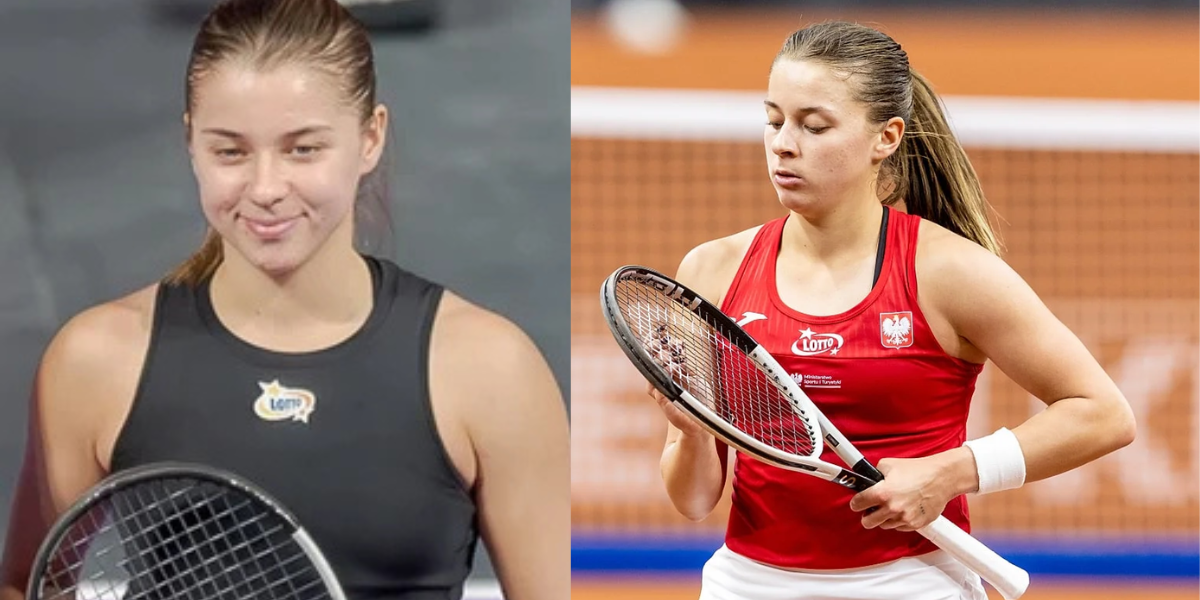
Tennis is a sport that loves its predictable narratives. Usually, the storylines write themselves: the top seeds cruise through draws, the former champions reclaim their throne, and the hard-hitting baseline beasts dominate the clay. Every once in a while, however, a player comes along who tears up that script, throws it in the Seine, and writes a brand new fairy tale in front of our eyes. Enter Maja Chwalinska.
Just a few months ago, if you mentioned the name Maja Chwalinska to the average tennis fan, you’d likely receive a blank stare in return. The 24-year-old from Dabrowa Gornicza in southern Poland was known primarily to hardcore followers of the ITF Circuit and the WTA 125 events. But the 2026 Roland Garros changed everything. She didn’t just show up in Paris; she took the tournament by storm. Starting as a qualifier ranked outside the top 100, she bulldozed her way through the draw, becoming the first qualifier in the Open Era to reach the women’s singles final at Roland Garros . It wasn’t about luck. It was about a left-handed, crafty game plan that baffled some of the biggest hitters in the world.
Her game is a refreshing throwback in an era dominated by brute force. Where others try to hit the felt off the ball, Maja Chwalinska prefers to paint the lines, drop the ball dead at the net, and use an almost surgical precision to dismantle her opponents’ confidence. This is the story of how a player who once feared she might have to leave her hotel room because she couldn’t afford it ended up battling for the Grand Slam title on the famous clay of Court Philippe-Chatrier . It’s a story about resilience, financial struggle, mental health battles, and a tennis IQ that is off the charts.
The Unexpected Rise: From the Qualifying Draw to the Final
To fully appreciate the magnitude of the 2026 French Open run, you have to look at the numbers. Ranking is everything in tennis—it dictates your entry into tournaments, your seeding, and your paycheck. When the draw for Roland Garros was released, Maja Chwalinska was ranked World No. 114. She wasn’t just an unseeded player; she was barely inside the qualifying conversation.
The tournament starts three weeks before the final for players like her. While Iga Swiatek and Aryna Sabalenka were relaxing in five-star hotels waiting for the main draw, Chwalinska was grinding it out on the back courts of Paris, playing three brutal qualifying matches to earn the right to see her name on the main draw sheet. But here is where the story takes a sharp turn into the unbelievable. Once she entered the main draw, she didn’t just compete; she dominated.
She racked up seven consecutive wins, dropping only one set along the way. In the quarterfinals, she dismantled a heavy favorite on paper, showcasing nerves of steel. Every time she was asked if she was surprised to be there, her response was humble yet hungry: “Nobody knows me, to be honest,” she admitted with a smile after a stunning victory. That anonymity ended the moment she held up that semifinal trophy. By reaching the final, the Polish left-hander secured a payday that dwarfed her career earnings and guaranteed that the tennis world would never forget her name again.
A Closer Look at Maja Chwalinska: Bio, Age, and Playing Style
If you watch her play, the first thing you’ll notice is that she doesn’t fit the modern prototype of a “power tennis player.” She is not 6 feet tall, nor does she serve at 120 miles per hour. Standing at 5 feet 5 inches (1.64 meters), she is often one of the shorter players on the court. But what she lacks in height, she makes up for in spin and angle.
Maja Chwalinska turned 24 years old in October during the 2026 season. Born in 2001, she is a left-handed player who utilizes a two-handed backhand. Her left-handedness is a massive tactical weapon. On the clay courts of Roland Garros, the lefty forehand cross-court into a right-handed player’s backhand is the most punishing shot in tennis, and she uses it to pull her opponents off the court time and time again.
Her tennis philosophy is simple: disrupt the opponent’s rhythm. In an era where players love to wind up and hit flat, predictable rockets, Chwalinska throws in slices, drop shots, and lobs. She forces you to generate your own pace. If you watched her semifinal run, you saw her turn power hitters into frustrated messes because they couldn’t find a consistent pace to hit against . She is the player nobody wants to face in a draw because “ugly” wins are still wins, and she is the master of winning ugly.
Career Highlights, Titles, and Rankings
It is tempting to look at the 2026 French Open final as a “flash in the pan,” but that would be disrespectful to the years of hard work that preceded it. Before she was a Grand Slam finalist, Maja Chwalinska was a consistent presence on the ITF Circuit and the WTA 125 level.
Her career achievements paint a picture of a born competitor:
Singles Titles: She has collected seven ITF singles titles along with three WTA 125 trophies, including victories in Florianopolis (2024) and Montreux (2025) .
Doubles Success: She is also a strong doubles player, holding three WTA 125 doubles titles to her name, proving she has soft hands and great court awareness.
Ranking Trajectory: Before Paris, her career-high singles ranking was World No. 113. However, the points earned from a Grand Slam final skyrocketed her into the Top 30 of the WTA Rankings. That is the kind of leap that changes your career overnight—moving from having to qualify for Slams to being seeded in them.
Junior Roots: Interestingly, she has a history with the current World No. 1. Back in 2017, she reached the Australian Open junior doubles final. Her partner? None other than fellow Pole Iga Swiatek. This proves that the talent was always there; it just took a little longer to bloom in the professional ranks.
A Battle Against Depression: The 2021 Break
There is a hole in the timeline of Maja Chwalinska’s career. If you look at her playing history, you will notice a significant pause in 2021. In the world of sports, athletes are often treated like robots—expected to produce results regardless of the emotional toll. But Chwalinska was brave enough to step away and speak the truth.
In 2021, she took a break from professional tennis. She was very open about her battle with depression, a condition that made it impossible for her to compete at the highest level. She has spoken about how the grind of the tour, the loneliness of travel, and the pressure to win became too heavy to bear alone. Walking away from the sport she loved was not a sign of weakness; it was an act of survival.
When she came back, she was a different player. She had perspective. She realized that tennis was something she did, not something she was. That mental reset is arguably the real reason she succeeded in Paris. While other players were choking on the pressure of the semifinals, Maja Chwalinska was just happy to be there. Having overcome real darkness off the court, a tiebreak in the third set seemed much less terrifying . She is a powerful advocate for mental health awareness, proving that taking care of your mind is just as important as practicing your forehand.
The Financial Reality: From Hotel Fears to Fortune
While we watch Grand Slams on television, seeing the glitz and glamour, the financial reality for players ranked outside the top 100 is grim. This is a part of the Maja Chwalinska story that is both shocking and heartwarming.
Tennis is largely an unfunded sport. Unless you have a massive sponsorship, you pay for your own flights, your coaches, your physios, and your hotels. When Maja Chwalinska arrived in Paris for the qualifying rounds, her budget was tight. She likely booked her hotel just for the week, expecting to lose and go home. But she kept winning.
As she advanced into the second week, a real crisis loomed. Prize money is paid after the tournament ends. She had run out of cash to pay for her room in an expensive city like Paris. Reports emerged that she was facing potential eviction from her hotel or at least the very real fear of not being able to afford the extended stay .
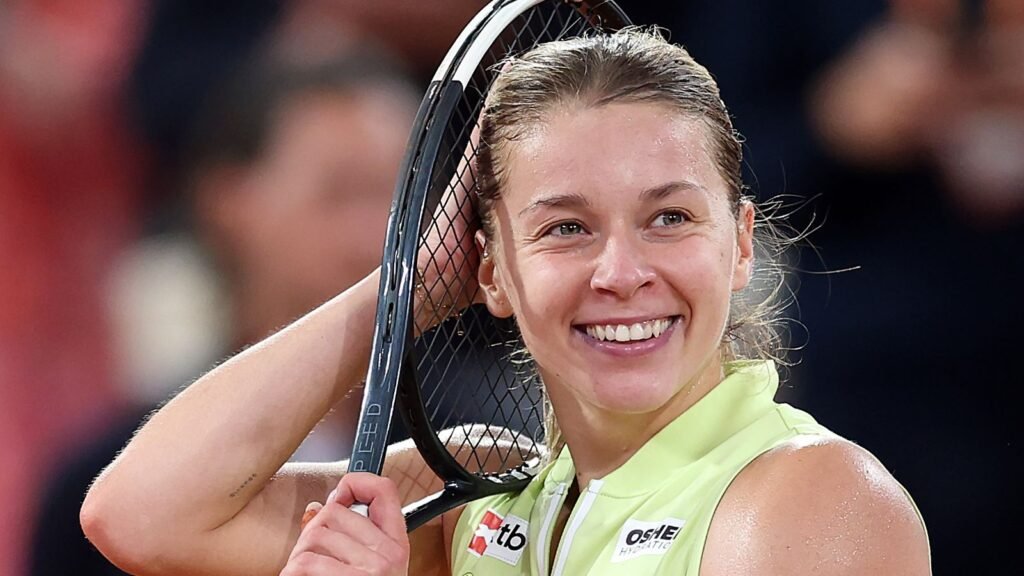
Enter the cavalry. Polish nutrition company Oshee, which happens to sponsor Iga Swiatek, stepped in to cover her lodging costs . It was a lifeline. Freed from the stress of where she would sleep, she focused on her tennis. And what a return on investment that was. By reaching the final, she was guaranteed a check for roughly $1.6 million (€1.4 million) . That single tournament earned her more than her entire career total combined. From scrounging for hotel money to millionaire status, her life changed in just two weeks.
The Tactical Breakdown: The Art of the Upset
How does a player ranked 114th in the world beat the top 10? You can’t do it by playing their game. If Maja Chwalinska tried to out-hit a player like Aryna Sabalenka or Elena Rybakina from the baseline, the match would be over in 45 minutes. She wins because she forces them to play her game.
Here is the tactical blueprint she used in Paris:
The Deceptive Drop Shot: Chwalinska has perhaps the best disguised drop shot on the WTA tour right now. Because her backswing is compact, opponents often don’t realize she has changed her grip until the ball is already floating over the net. On the heavy clay, this shot is deadly. It forces tall, powerful movers to sprint forward, and usually, they arrive at the ball just in time to shovel it into the net.
The Loopy High Ball: Rather than hitting flat, she uses heavy topspin to loop the ball deep. This pushes her opponent several feet behind the baseline. Once they are back there, the court opens up for her to hit a sharp angle.
Slice Changes: She uses the backhand slice not just as a defensive shot, but as an attacking tool. The low, skidding slice on clay stays low, making it very difficult for opponents to get under the ball to generate their own topspin.
By mixing these three speeds (fast, slow, low), she creates a rhythm that is impossible to lock into. She is a “mixologist,” and she was serving up cocktails that gave the top seeds a massive headache.
Maja Chwalinska vs. The Future: What Comes Next?
The biggest challenge for any “Cinderella story” in tennis is the follow-up. Once you reach a Grand Slam final, the surprise factor is gone. The cat is out of the bag. The scouts on the WTA tour will now dissect every weakness in her game. They will study video to find a way to counter her dropshots and neutralize her lefty forehand.
However, the 2026 Roland Garros finalist has the tools to stay relevant. She is entering a new phase of her career with financial security. She can now afford a better team, better physical training, and more recovery tools. Furthermore, the ranking points from her Paris run mean she will be seeded in future Grand Slams. This is huge. It means she skips the qualifying rounds and avoids the top seeds until the third or fourth round.
Moreover, Poland has become a hotbed for tennis talent. While Iga Swiatek has been the headliner, the emergence of Maja Chwalinska gives Poland a formidable one-two punch in the Billie Jean King Cup. Imagine trying to beat Poland when you have to face the relentless consistency of Swiatek and the tricky, unconventional lefty game of Chwalinska back-to-back.
The 2026 French Open Final: A Clash of Styles
The final itself was a testament to her grit. Standing across the net was Mirra Andreeva, the young Russian prodigy known for her explosive power and angle generation. It was the classic matchup of “Power vs. Precision,” “Youth vs. Experience,” and “Right vs. Left.”
While Andreeva tried to blast winners from the first ball, Maja Chwalinska played the role of the counter-puncher to perfection. She absorbed the pace, redirected it, and used her signature drop shot to bring the teenager to the net time and time again. The match swung back and forth, but Chwalinska never wavered. She played the biggest points of her life with the coolness of a veteran poker player. The final sent shockwaves through the tennis world, proving that you don’t have to be the strongest player on the court to be the smartest.
Conclusion
The journey of Maja Chwalinska is far from over, but the chapter written in the spring of 2026 will be hard to top. In the span of a few weeks, she went from relative obscurity to household name status in the tennis world. She reminded us that sports are not just about statistics and power; they are about heart, intelligence, and the ability to overcome.
She overcame depression to find joy in the game again. She overcame financial hurdles to stay in the tournament. She overcame physical disadvantages by outsmarting her opponents. She represents the “everywoman” in a sport of giants—proving that if you have the right strategy and an unbreakable will, you can stand toe-to-toe with the very best.
As she lifted the runner-up trophy (and hopefully eyes the winners’ trophy next time), the world finally knew who she was. The lefty from Poland who slices, dices, and never says die.
Frequently Asked Questions
Who is Maja Chwalinska?
Maja Chwalinska is a Polish professional tennis player. Born in 2001, she is known for being a left-handed player with a strategic, high-IQ playing style that relies on dropshots and spins rather than brute power. She rose to global fame by reaching the 2026 French Open final as a qualifier .
What is Maja Chwalinska’s current WTA ranking?
Following her historic run to the final at Roland Garros in 2026, Maja Chwalinska’s ranking saw a massive surge. Starting the tournament ranked just inside the top 115, the points accumulated from winning seven consecutive main draw matches propelled her into the top 30 of the WTA Rankings for the first time in her career .
Did Maja Chwalinska face financial problems during the French Open?
Yes, surprisingly. Before her breakout run, Maja Chwalinska had limited prize money. As she advanced to the second week in Paris, she reportedly struggled to afford the expensive hotel costs. She was facing potential eviction until the Polish company Oshee stepped in to sponsor her lodging during the tournament .
What is Maja Chwalinska’s playing style?
She is considered a “tactician.” Unlike many modern players who rely on aggressive baseline hitting, Maja Chwalinska uses a variety of spins, slices, and drop shots to disrupt her opponent’s timing. She excels at changing the pace of the ball and using her left-handed angles to pull opponents off the court.
Has Maja Chwalinska played doubles with Iga Swiatek?
Yes, though it was during their junior careers. Both Polish stars played together as teenagers. They reached the final of the girls’ doubles event at the 2017 Australian Open, showcasing Polish tennis talent long before they became top singles professionals .