
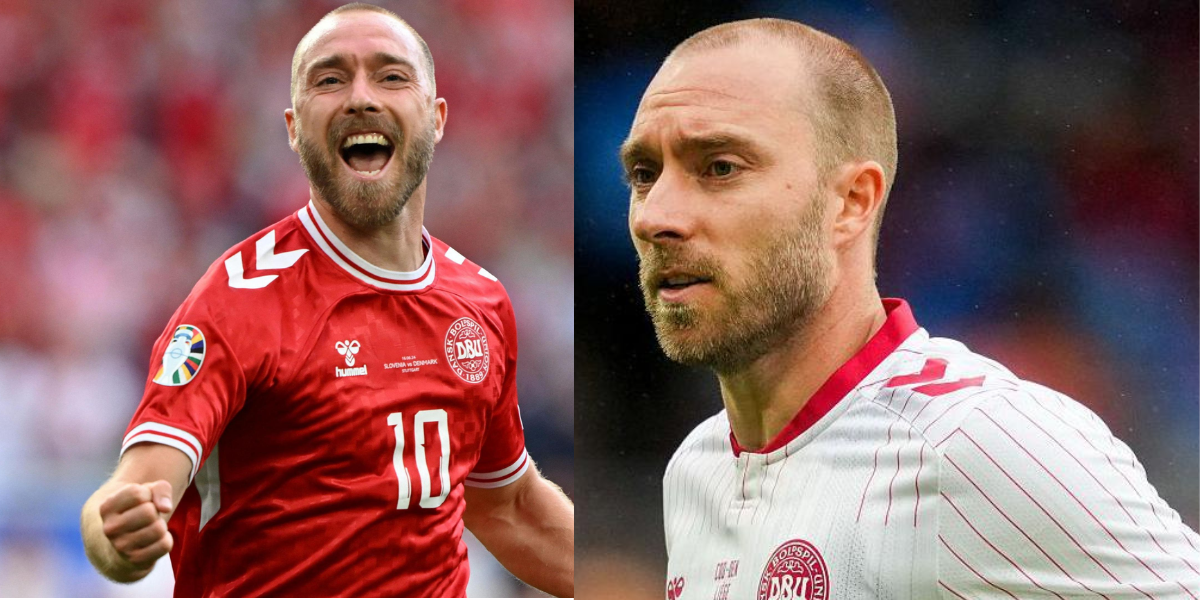
Few footballing stories have captured the world’s collective heart quite like that of Christian Eriksen. For many fans, the Danish playmaker’s name is synonymous with an unimaginable, yet ultimately triumphant, narrative of life, death, and the beautiful game. He isn’t just a footballer who suffered a cardiac arrest; he is a symbol of resilience who used his own second chance to redefine what is possible in modern sport. This long-form piece will take you through his entire journey: from the prodigious talent at Ajax, through his peak years as the creative heartbeat of Tottenham Hotspur, his life-altering collapse at Euro 2020, and his inspiring returns with Brentford, Manchester United, and now Wolfsburg. It’s a story of elite-level passing range, masterful set-pieces, and a profound sense of perspective that has made him one of the most respected figures in the game today.
The Prodigy Who Rose from a Small Danish Town
Christian Dannemann Eriksen was born on February 14, 1992, in the quaint town of Middelfart, Denmark. From an early age, it was clear he possessed an uncommon gift with the ball at his feet. Growing up idolising Danish legends like the Laudrup brothers and Italian maestro Francesco Totti, he spent countless hours in his garden, constructing makeshift goalposts and honing the technique that would one day mesmerise millions. His journey began locally at Middelfart G&BK before a move to Odense Boldklub (OB) set the stage for a higher level of competition. By the time he was 16, the biggest clubs in Europe had already taken notice, and it was Ajax Amsterdam that won the race for his signature.
The Ajax academy was the perfect finishing school for a player of Eriksen’s intelligence and technical ability. He quickly rose through the ranks, making his first-team debut at just 18 years old in 2010. Over the next three seasons, he became the linchpin of a thrilling Ajax side that won three consecutive Eredivisie titles. His ability to control the tempo of a match, pick out the most devastating through ball, and produce moments of magic from nothing drew inevitable comparisons with the club’s legendary number 14. However, Eriksen was always his own player—a modern playmaker who could operate in tight spaces and deliver the final ball with unerring consistency. His 32 goals and countless assists in 162 appearances for the Amsterdam giants signalled his readiness for a bigger stage.
Conquering the Premier League as Tottenham’s Creative Engine
In August 2013, Tottenham Hotspur secured the services of Eriksen for a reported fee of around £11.5 million, a bargain price that would soon look like one of the smartest pieces of business in Premier League history. While Spurs had just sold Gareth Bale, they had quietly acquired the Danish dynamo who would take on the creative mantle for the next seven seasons. He won the Tottenham Hotspur Player of the Year award in his very first season, instantly winning over the supporters with his vision and work rate.
His time in North London transformed him from a promising talent into a certified world-class operator. Under managers like Mauricio Pochettino, Eriksen became the heartbeat of a side that consistently challenged for the Premier League title and reached the 2019 Champions League final. During his Spurs career, no player in the English top flight provided more assists or created more chances than the Dane. He became the king of the key pass, threading balls through the smallest of gaps to unlock the most stubborn defenses. The period from 2013 to 2019 saw him establish himself as arguably the most consistent creative midfielder in England, a feat made all the more impressive by his durability and relentless pressing. It was during these years that he truly earned the nickname ‘King Christian’, a testament to his regal command of the midfield.
A Short but Significant Interlude in Milan
After six and a half magnificent years in London, Eriksen sought a new challenge, securing a move to Italian giants Inter Milan in January 2020. The move was driven by a desire to win major league titles and experience a different tactical culture. His first full season in Serie A was one of adjustment, as he adapted to Antonio Conte’s demanding physical and tactical systems. It wasn’t always a smooth ride; at times, he looked like a player trying to fit a square peg into a round hole, struggling to find the same creative freedom he had enjoyed in the Premier League.
However, as the 2020/21 campaign reached its climax, the old magic began to resurface. Eriksen played a pivotal role in the run-in, contributing crucial goals and performances that helped Inter secure their first Scudetto in 11 years. His ability to dictate play from deeper positions was finally being utilized effectively, proving that even in a more rigid tactical setup, his quality would always shine through. It was a short but successful stint that included a league title, yet it also served as the calm before the devastating storm that was about to break on the international stage.
The Collapse That Stopped the World: Euro 2020
On June 12, 2021, football and reality collided in the most terrifying way imaginable. During Denmark’s opening Group B match against Finland at the European Championship, Christian Eriksen collapsed on the pitch. Without warning, he suffered a sudden cardiac arrest. The scene that followed was harrowing: teammates forming a protective shield around him, medical staff performing CPR, and his distraught partner, Sabrina, consoled by captain Simon Kjær on the sidelines. For 13 agonising minutes, the world held its breath.
The world-class response from the team’s medical staff, who successfully resuscitated him with a defibrillator, saved his life. Later, he was fitted with an Implantable Cardioverter Defibrillator (ICD), a device that monitors heart rhythms and delivers shocks if a dangerous arrhythmia is detected. What followed was not a question of “if” he would play again, but “if” he would survive. The incident transcended sport, sparking a global conversation about heart health and emergency preparedness on the pitch. Everyone was just grateful that he was alive.
The Miraculous Return: Brentford, United, and a New Chapter
For most elite athletes, a cardiac arrest would be the end of the road. For Christian Eriksen, it was the beginning of a second act. Despite Italian rules preventing him from playing in Serie A with his ICD, he was determined to return. Just eight months after his collapse, he signed with Premier League side Brentford in January 2022. The footballing world watched in disbelief as he walked onto the pitch again, his ICD a visible reminder of how close he had come to losing everything. His performances for the Bees were nothing short of miraculous. He wasn’t just playing; he was orchestrating games, rolling back the years, and reminding everyone of the player he once was.
His form earned him a move to Manchester United, where he spent three seasons, adding experience and composure to a young midfield. On the international front, his story became even more poetic. At the 2022 FIFA World Cup in Qatar, less than 18 months after his heart stopped, he scored for Denmark on his tournament return. It was a moment of pure, unadulterated joy. He completed his remarkable journey by helping United win the Carabao Cup, adding more silverware to his cabinet. His story became a beacon of hope, proving that with the right medical care, mental strength, and an unyielding love for the game, nothing is impossible.
“If I was not enjoying it, I would be on a beach somewhere doing something else. It has always been about the same thing, the love of it, just that feeling of being a football player, on the pitch, running after a ball.” — Christian Eriksenchristian eriksen
A Masterclass in Passing: Unpacking the Playing Style
To watch Christian Eriksen at his best is to watch a masterclass in midfield orchestration. He is the rare player who genuinely makes the game look easy. His style of play is defined by an almost poetic ability to create chances, making him the linchpin of any attack he anchors. He possesses an exceptional knack for progressive passing, consistently threading the needle to unlock opposing defences. Whether it is a chipped ball over the top, a driven pass into the striker’s feet, or a sweeping switch of play to a flying winger, his range is immense.
Eriksen’s primary position is that of a playmaker, typically operating as a central or attacking midfielder. However, his intelligence allows him to adapt, having played effectively as a number six, eight, ten, and even a false nine earlier in his career. His strengths are clear and defined. He is a set-piece specialist, capable of bending free-kicks with both accuracy and power, and his corner delivery is a perennial goal threat. He loves to shoot from distance and is a master of key passes, the pass that leads directly to a shot on goal.
If there is a weakness, it lies in his defensive contributions. His tackling and aerial duels are areas where he can be exposed, particularly in more physical, high-intensity games. He is not a player who will win the ball back with crunching tackles; instead, he relies on interceptions and intelligent positioning to break up play. His game is not about progressive carrying—he won’t often beat a defender with a mazy run. Instead, he orchestrates from a slightly deeper, more cerebral space, dictating the rhythm of the contest with his sharp, intricate passing triangles. At heart, he is a conductor, not a fighter, and when surrounded by energetic midfielders, his artistry truly flourishes.
Key Career Statistics and Achievements: A Visual Breakdown
To truly appreciate the scale of his contribution to the game, it is helpful to look at a consolidated view of his career numbers. The following table breaks down some of his key statistics across all major club competitions, offering a snapshot of his consistency and impact at the highest level.
| Competition | Appearances | Goals | Assists | Major Honours |
|---|---|---|---|---|
| Eredivisie (Ajax) | 113 | 25 | 35+ | 3x Eredivisie, KNVB Cup |
| Premier League | 310 | 55 | 78 | Tottenham Player of the Year (2x), PFA Team of the Year |
| Serie A (Inter Milan) | 43 | 4 | 2 | Serie A Champion |
| Bundesliga (Wolfsburg) | 60+ | 6+ | 15+ | Danish Football Player of the Year (4x) |
| National Team (Denmark) | 149 | 46 | 28 | UEFA Euro 2020 Team of the Tournament |
(Statistics compiled from various football data sources)
Life Off the Pitch: The Man Behind the Midfielder
The focus is often on the statistics and the trophies, but the character of an athlete is revealed in the moments that matter most. Eriksen has always been known for his quiet, reserved nature, preferring to let his feet do the talking rather than seeking the limelight. Yet, his public journey has shown a man of incredible strength, humility, and grace. He is a devoted husband to his wife, Sabrina Kvist Jensen, with whom he shares two children. It was his love for his family that gave him the initial strength to fight for his life on that fateful day in Copenhagen.
His status as Denmark’s most decorated modern footballer—he has been voted Danish Football Player of the Year four times—is only part of the story. He is also a dedicated philanthropist, using his platform to support various children’s charities. Despite the fame, he has managed to keep a grounded perspective. In a January 2026 interview with Sky Sports, he remarked that although his team-mates are getting younger and he is now in the twilight of his career, he does not feel old. “All the new players coming up, they are born in the 2000s, even the late 2000s. That is weird,” he said, smiling. This lack of ego and enduring passion for simply “running after a ball” has endeared him to fans, coaches, and opponents alike.
A Brief Heart Scare Reminds Everyone of His Mortality
In a stark reminder of the fragility of life, Eriksen experienced another collapse while playing for Denmark in a friendly match against Ukraine in June 2026. The football world immediately held its breath once more. However, this episode had a very different outcome. He walked off the pitch under his own steam and was taken to a hospital for observation. Denmark’s team doctor, Morten Boesen, provided immediate reassurance, stating, “As I see it, the pacemaker responded as it should. He was briefly unconscious, but regained consciousness very quickly”.
While another collapse of this nature is concerning, it also demonstrated the invaluable nature of the ICD device that has allowed Eriksen to continue his career. The device did exactly what it was designed to do. Eriksen later sent his regards to his teammates through the doctor, telling them he was okay. The incident sparked a new wave of support and appreciation for the midfielder, highlighting the inherent risks he takes every time he steps onto the pitch. Yet, as he has proven time and again, he refuses to live in fear, choosing instead to embrace the game he loves.
Assessing His Legacy and Current Form
So, where does Christian Eriksen stand in the pantheon of modern footballers? His legacy is twofold. Firstly, as a footballer, he is one of the most gifted playmakers of his generation. His numbers in the Premier League for chance creation place him alongside legends like Cesc Fàbregas and David Silva. He was the engine that powered Mauricio Pochettino’s high-flying Tottenham side and has brought composure to every club he has represented.
But his lasting impact will be as an inspiration. Eriksen changed the way we talk about player health and safety. His survival and successful return forced organizations like UEFA and FIFA to implement stricter protocols for medical emergency training. He became a living symbol of hope for millions, demonstrating that life’s script can be rewritten.
His current form at Wolfsburg, where he moved in 2025, suggests he is still performing at a high level. In the 2025/26 Bundesliga season, he contributed three goals and nine assists in 31 appearances, showing that the creative vision is still very much intact. He may not be the 24-year-old prodigy anymore, but he has evolved into a wise, deep-lying conductor, using his experience to read the game a pass or two ahead of everyone else. His journey from a boy in Middelfart to the King of Denmark and, finally, to a global symbol of resilience, is a testament to the indomitable human spirit.
Conclusion
Christian Eriksen is a true one-off. His story encompasses everything we love about sport: the thrilling highs of a perfectly curled free-kick, the devastating lows of a life-threatening injury, and the ultimate redemption of a miraculous return. He went from being a highly respected Premier League star to a universally admired figure of courage. Whether he was threading a defense-splitting pass for Harry Kane at White Hart Lane, celebrating a Scudetto in Milan, or walking back onto a pitch eight months after his heart stopped, he has consistently embodied class and resilience.
He continues to play the game on his own terms, still full of the same love he had as a child. He has proven that a heart, even one that needed a helping hand, is still the most important muscle in football. His legacy is sealed not just by his trophies or his four Danish Player of the Year awards, but by the simple, profound truth that sometimes, the greatest victory is not a trophy; it is simply waking up, putting on your boots, and doing what you love.
Frequently Asked Questions
What happened to Christian Eriksen during the Euro 2020 match against Finland?
During the 43rd minute of Denmark’s opening match against Finland at Euro 2020, Christian Eriksen collapsed on the pitch without warning. He had suffered a sudden cardiac arrest. His Denmark teammates formed a protective circle around him as medical staff performed CPR and used a defibrillator to restart his heart. He was resuscitated after 13 minutes and was later fitted with an implantable cardioverter-defibrillator (ICD). The incident was a terrifying wake-up call for the footballing world about the importance of emergency medical preparedness.
What is an ICD and how has it allowed Christian Eriksen to keep playing?
An ICD, or Implantable Cardioverter Defibrillator, is a small battery-powered device placed in the chest to monitor heart rhythms. If the device detects a dangerous or irregular heartbeat, it delivers a shock (defibrillation) to restore a normal rhythm. Eriksen wears an ICD, which was implanted after his cardiac arrest in 2021. While Italian football regulations prevented him from playing in Serie A with the device, leagues like the Premier League and Bundesliga allowed it. This device is the reason he can continue his career; it acts as a safety net, constantly monitoring his heart while he plays.
What teams have Christian Eriksen played for in his career?
Christian Eriksen has enjoyed a diverse and successful career across multiple top European leagues. He began his professional career at Ajax in the Netherlands, where he won three Eredivisie titles. He then moved to the Premier League, first starring for Tottenham Hotspur for seven seasons, before a brief but trophy-winning stint with Inter Milan in Italy. Following his cardiac arrest, he made inspiring returns to the Premier League with Brentford, then played for Manchester United for three seasons. He currently plays for VfL Wolfsburg in the German Bundesliga.
How many goals and assists has Christian Eriksen scored in the Premier League?
During his time in the Premier League with Tottenham Hotspur, Brentford, and Manchester United, Christian Eriksen established himself as one of the most prolific chance creators in league history. Across 310 league appearances, he scored 55 goals and provided 78 assists. At one point, during his Tottenham prime, no player in the Premier League had created more chances or provided more assists than the Danish playmaker.
Is Christian Eriksen still playing for the Denmark national team?
Yes, as of the 2025/26 season, Christian Eriksen continues to be a crucial member of the Denmark national team. He earned his 151st cap for his country in a June 2026 friendly against Ukraine. Despite a brief collapse in that match, which was later attributed to his ICD device functioning correctly, he remained a key figure in the squad. He has scored 46 goals in over 150 international appearances, making him one of the most capped and highest-scoring players in Danish football history.