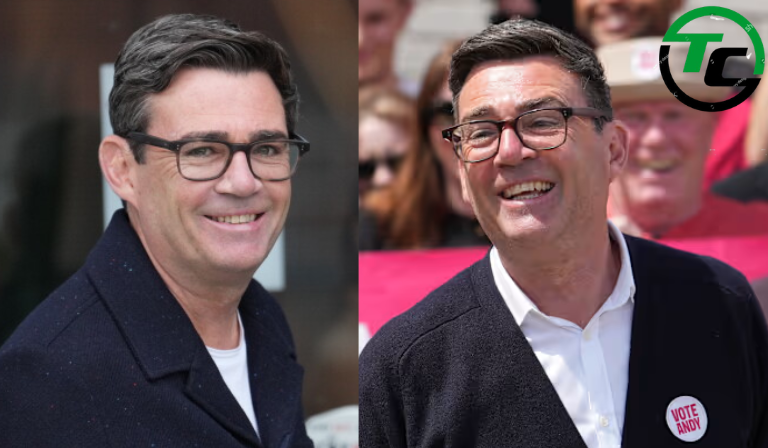
Andy Burnham is a name that has dominated British political headlines in recent weeks. Following his landslide victory in the Makerfield by-election, the man often called the “King of the North” has returned to Westminster with his sights set on the highest office in the land . But who is Andy Burnham, really?
He’s a political insider turned regional champion—a former Cabinet minister who left Parliament to become Mayor of Greater Manchester, only to return more popular than ever. Now, at 56, he’s positioning himself as a potential challenger to Prime Minister Sir Keir Starmer for the Labour leadership .
This is the story of a politician who has reinvented himself multiple times, from a rising star of New Labour to a champion of northern England who could soon be eyeing the keys to 10 Downing Street.
Quick Facts: Andy Burnham
| Fact | Detail |
|---|---|
| Full Name | Andrew Murray Burnham |
| Date of Birth | January 7, 1970 (age 56) |
| Place of Birth | Aintree, Liverpool, England |
| Political Party | Labour |
| Education | Fitzwilliam College, Cambridge (English) |
| Current Role | MP for Makerfield (2026–present), Mayor of Greater Manchester (2017–present) |
| Previous Roles | Health Secretary, Culture Secretary, Chief Secretary to the Treasury, Shadow Home Secretary |
| Leadership Bids | 2010 (4th place), 2015 (2nd place) |
| Nickname | “King of the North” |
| Known For | Bee Network transport system, Hillsborough justice campaign, COVID-19 lockdown standoff with Boris Johnson |
Early Life and Background
Growing Up Between Liverpool and Manchester
Born in Liverpool in 1970, Andy Burnham grew up in Culcheth, a quiet commuter village in Cheshire, near Warrington . His father was a BT engineer and his mother a GP receptionist—both staunch Labour supporters who instilled in him a strong sense of social justice .
Burnham joined the Labour Party at age 15, inspired by the powerful BBC drama Boys from the Blackstuff, which depicted life on the dole in Liverpool . The show left a lasting impression on the young Burnham, shaping his political worldview from an early age .
A Competitive, Sports-Mad Childhood
A lifelong Everton fan, Burnham was a competitive child who excelled at sports. He was a fast bowler for the Lancashire schoolboys cricket team . His friends remember him as fiercely competitive, a trait that would serve him well in the cutthroat world of politics.
Cambridge University and Feeling Like an “Imposter”
Burnham and his two brothers were the first in their family to attend university. He studied English at Fitzwilliam College, Cambridge . In his book Head North, he admitted that he “struggled to feel part of things” at university and felt like an “imposter” .
However, his love for northern indie bands like The Smiths and The Stone Roses gave him an identity and a connection to Manchester’s vibrant music scene .
Career and Major Achievements
From Journalism to Parliament
After graduating, Burnham worked in journalism for trade magazines including Tank World and Passenger World Management . He then transitioned into politics, working as a researcher for the late Tessa Jowell, a Labour minister under Tony Blair and Gordon Brown .
He served as a special adviser to Culture Secretary Chris Smith before being elected as the MP for Leigh in Greater Manchester in 2001 . This was the beginning of a 16-year parliamentary career.
Rising Through the Ranks: Ministerial Roles
Burnham quickly rose through the Labour ranks under Tony Blair and Gordon Brown. He held several junior ministerial positions before joining the Cabinet as Chief Secretary to the Treasury, then Culture Secretary, and finally Health Secretary .
The Hillsborough Disaster: A Defining Cause
As Culture Secretary, Burnham took on an issue that became a cornerstone of his career: the fight for justice for the victims of the Hillsborough disaster . In 1989, 97 Liverpool fans were killed in a stadium crush at Hillsborough in Sheffield .
At a 2009 memorial service marking the 20th anniversary of the disaster, Burnham was heckled by victims’ families demanding justice . The experience spurred him to raise the issue in Cabinet, contributing to the creation of the Hillsborough Independent Panel . The panel’s 2012 report was critical of the police’s initial false narrative blaming drunken fans, leading then-Prime Minister David Cameron to offer a “profound apology” for the “double injustice” .
His work on Hillsborough earned him deep respect and remains one of his most significant political achievements .
Two Failed Leadership Bids
After Labour’s 2010 general election defeat, Gordon Brown resigned, and Burnham ran for the Labour leadership. He came fourth out of five candidates, losing to Ed Miliband .
In 2015, he tried again. This time, he came second, beaten by the left-winger Jeremy Corbyn . Despite being seen as being on the Blairite centre-right of the party, Burnham served as Shadow Home Secretary under Corbyn and did not resign during the 2016 leadership crisis .
Reinvention: Mayor of Greater Manchester
In 2017, Burnham stood down as an MP to run for the newly created position of Mayor of Greater Manchester. He won with more than 60% of the vote and was re-elected in 2021 and 2024 with even larger majorities .
His mayoralty has been transformative. He oversaw the region’s rapid regeneration, bringing bus services back under public control through the integrated “Bee Network” . He also pledged to end rough sleeping and donated 15% of his £110,000 salary to a homelessness fund .
The “King of the North” and COVID-19
Burnham’s national profile skyrocketed during the COVID-19 pandemic. He publicly challenged then-Prime Minister Boris Johnson over what he called a “London-centric” approach to the crisis . This standoff earned him the nickname “King of the North”—a “Game of Thrones”-inspired nod to his championing of the region .
Personal Life and Political Style
A Northern Everyman
Burnham presents himself as an amiable northern everyman. He prefers T-shirts to suits and ties and spends his spare time playing football or spinning 1990s tunes during DJ battles . This down-to-earth style has helped him connect with voters in a way that many Westminster politicians struggle to achieve .
What Makes Him Unique?
According to Tim Bale, professor of politics at Queen Mary University of London, Burnham “seems to have the kind of X factor that encourages people to think of him as not an ordinary politician, somebody who can communicate with normal people, someone who can speak human” .
Family and Relationships
Burnham is married and has children, though he keeps his family life relatively private. He has spoken about the importance of family and how his parents’ Labour values shaped his own political beliefs .
Interesting Facts
- Football Fanatic: Burnham is a lifelong Everton supporter and was watching his team play Norwich when he learned of the Hillsborough disaster unfolding in 1989 .
- Cricket Star: He was a fast bowler for Lancashire schoolboys cricket team .
- Indie Music Lover: He’s a fan of The Smiths and The Stone Roses and has even participated in DJ battles .
- Author: Burnham wrote a book, Head North, about his political philosophy .
- Salary Donation: He donated 15% of his mayoral salary to a homelessness fund .
Legacy and Current Activities
The Makerfield Victory
In June 2026, Burnham won the Makerfield by-election with nearly 55% of the vote, beating Reform UK’s candidate by more than 9,000 votes . His victory speech was striking: “Everyone knows that politics isn’t working… Tonight could, just could, be the turning point. This is a final chance to change… There will be no second chance” .
A Leadership Challenge Looming
Burnham’s return to Parliament clears the key procedural obstacle to a Labour leadership challenge, as party rules require candidates to be sitting MPs . While Starmer has said he will “stand and fight any challenge,” Burnham has done little to dampen speculation about his ambitions .
The “Manchesterism” Vision
Burnham is pledging to repeat on a national scale his signature brand of “Manchesterism”—a politics that puts people and place before party, centering on regions ignored by central governments in London . “What we’ve built in Greater Manchester needs to go national,” Burnham said during the campaign .
The Big Question
Can the “King of the North” also be King of the South, East, and West? Critics note that running a country of 70 million is vastly different from overseeing a city region of 3 million . Nonetheless, Burnham now has the momentum that could propel him into 10 Downing Street .
Conclusion
Andy Burnham‘s journey from Westminster insider to regional champion and back again is one of British politics’ most remarkable stories. He’s a politician who has reinvented himself, learning from two failed leadership bids to emerge as one of the country’s most popular and effective political figures .
His decisive victory in Makerfield has placed him at the centre of the national stage once again . Whether he can translate his success as the “King of the North” into a successful national campaign remains to be seen. But one thing is clear: Andy Burnham is a force to be reckoned with, and his ambitions extend far beyond Greater Manchester.
With a reputation as a winner, a compelling personal story, and a clear vision for national change, Burnham could very well be Labour’s best hope for recovery. The question now is whether he can capture the hearts and minds of voters across the country—not just in the north .
Frequently Asked Questions (FAQs)
1. Who is Andy Burnham?
Andy Burnham is a British Labour politician, the Mayor of Greater Manchester, and the MP for Makerfield. He is a former Cabinet minister who has run twice for the Labour leadership and is now seen as a potential challenger to Prime Minister Sir Keir Starmer .
2. Why is Andy Burnham called the “King of the North”?
Burnham earned the nickname during the COVID-19 pandemic when he publicly challenged then-Prime Minister Boris Johnson over what he called a “London-centric” approach to regional lockdown restrictions . It also reflects his role as a champion of northern England .
3. What is Andy Burnham’s political stance?
Burnham is perceived as being to the left of Keir Starmer. He supports the nationalisation of water and energy and opposes trickle-down economics . However, critics have sometimes labelled him a political “weather vane” for his shifting positions over the years .
4. What is the Bee Network?
The Bee Network is Greater Manchester’s integrated public transport system. Under Burnham’s leadership, the region became the first outside London to bring bus services back under public control .
5. Has Andy Burnham been prime minister before?
No, Andy Burnham has never been Prime Minister. He has served as a Cabinet minister, Mayor of Greater Manchester, and MP, but has not held the UK’s top office .
6. What is Andy Burnham’s stance on Brexit?
Burnham supported Remain during the Brexit referendum and has expressed a desire to see the UK rejoin the EU “in the long-term.” However, he has said he will not advocate for rejoining during by-elections in pro-Brexit areas .
7. What are Andy Burnham’s main priorities?
Burnham has outlined priorities including better vocational education and jobs for young people, lower energy bills and rail fares, and an end to trickle-down economics .